
Choosing the wrong Key Opinion Leader (KOL) is expensive. An advisory board built around the wrong experts, a speaker programme that doesn't land, or an engagement plan that misses the voices shaping your field can all set a medical affairs strategy back by months.
Yet in many organisations, KOL identification still means weeks of manual work: searching publications, scanning congress programmes, checking trial investigator lists and compiling everything into spreadsheets that are outdated almost immediately.
There is a faster and more reliable way to do it.
Who is a Key Opinion Leader?
A KOL is a respected expert whose views influence how peers think and practise within a therapy area. They might be clinicians, researchers, guideline authors or trial investigators. Their opinions shape clinical decisions, so engaging the right ones is central to scientific exchange.
Why traditional KOL identification is so slow
The conventional process has several weaknesses:
- Fragmented sources. Evidence of influence is scattered across publications, trials, congress activity, guidelines and professional societies.
- Manual compilation. Researchers collect and cross-check data by hand, which takes time and invites errors.
- Static results. A list that took three weeks to build can be out of date the day it's finished.
- Narrow definitions of influence. Counting publications alone ignores speaking activity, trial leadership, collaboration networks and emerging voices.
What a strong KOL profile includes
Whether you build it manually or with a platform, a useful KOL profile should cover:
- Publication activity: volume, topics and recency, not just career totals
- Clinical trial involvement: roles as investigator or principal investigator
- Congress and speaking presence: where they present and on what
- Guideline and society involvement: formal markers of influence
- Professional network: who they collaborate with and who they influence
- Geographic and institutional context: relevant for regional strategy
From lists to maps
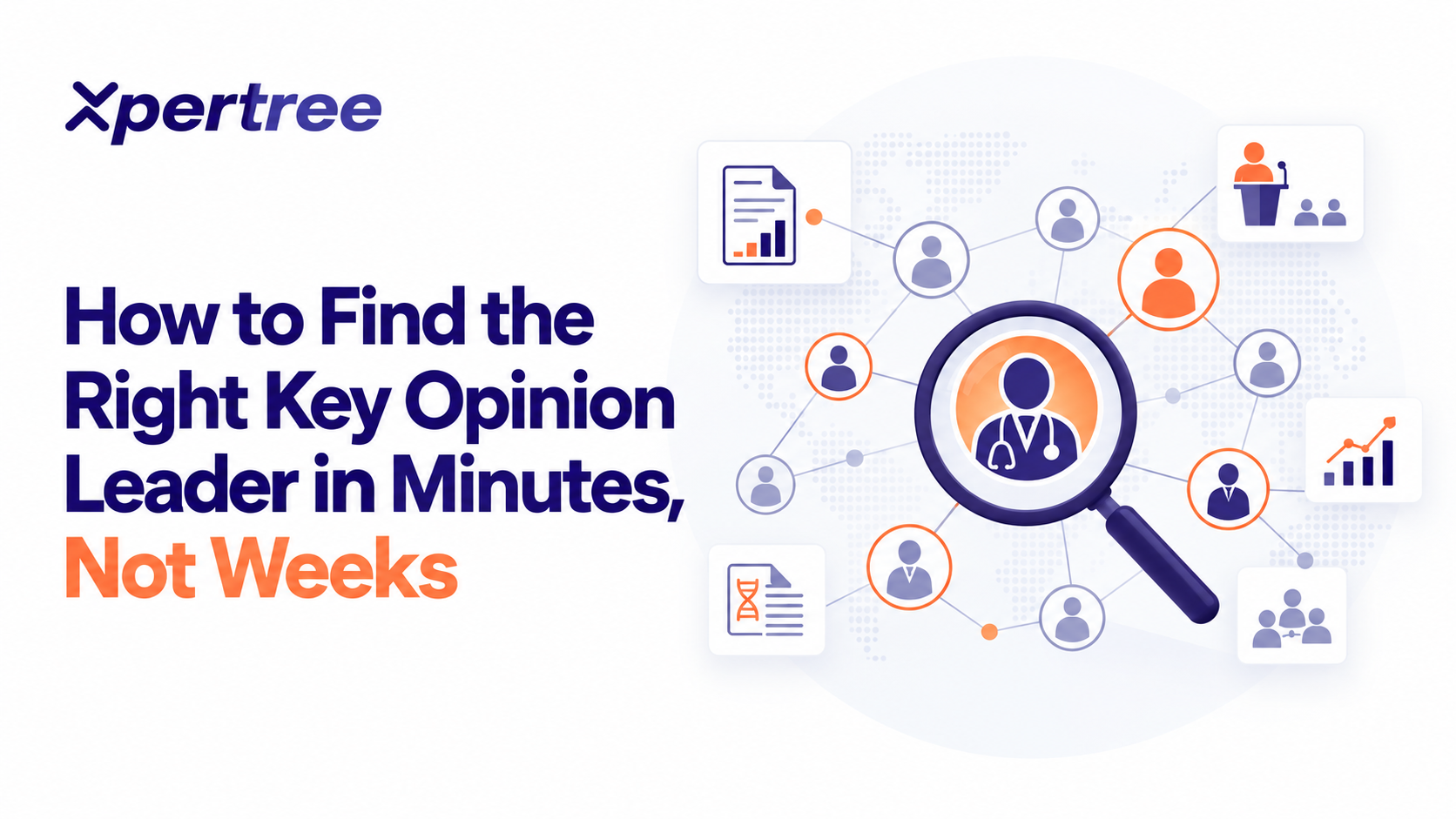
A flat list of names tells you who exists. A map tells you how they connect. Network mapping reveals which experts sit at the centre of a community, which are rising and which bridge different specialties. That is the difference between inviting ten well-known names and building an engagement plan around real influence.
How Xpertree speeds this up
Xpertree, a platform from Orakris, is built for real-time KOL identification, profiling, mapping and engagement. Instead of assembling data by hand, teams get a structured, current view of the experts in their therapy area.
In practice, this means teams can:
- Identify relevant experts quickly instead of waiting weeks for a research report
- Build consistent, comparable profiles
- Map relationships between experts to prioritise who to engage
- Keep their view current as the field changes
Practical tips for better KOL selection
- Define your objective first. An advisory board, a speaker programme and a publication planning group each need different profiles.
- Look beyond the obvious names. Emerging experts often become tomorrow's leaders and may be more available.
- Match expertise to the question. The most famous expert is not always the best fit for a specific scientific topic.
- Refresh regularly. Influence changes, so your list should too.
Final thoughts
KOL identification should support your strategy, not delay it. By replacing manual research with real-time profiling and mapping, medical affairs teams can spend less time compiling data and more time building relationships that matter.
Accelerate Your KOL Strategy
To see how Xpertree can support your KOL strategy and scientific exchange with real-time intelligence, contact the Orakris team.